
If you suspect chinch bugs, confirm it before you spray: a coffee-can float test at the edge of a damaged patch floats the bugs to the surface where you can count them against a treatment threshold. If the count clears it, treat with a liquid insecticide during hot, dry weather once the nymphs have hatched, not weeks earlier as insurance.
Which chinch bug you have depends on where you live. North of the transition zone, on cool-season lawns like Kentucky bluegrass, it is almost always the hairy chinch bug; in the South, especially on St. Augustinegrass, it is the southern chinch bug, a faster-cycling relative. The confirmation method is the same for both; the calendar differs.
Confirm you actually have chinch bugs first
Chinch bug damage looks like drought stress: yellow to brown patches, usually starting in the sunniest, hottest parts of the lawn. The giveaway is that the grass stays rooted: chinch bugs are sap-suckers that discolor and thin turf, while grub-chewed sod lifts like loose carpet. On St. Augustinegrass, check the thatch line for tiny black-and-white adults with red-orange nymphs.
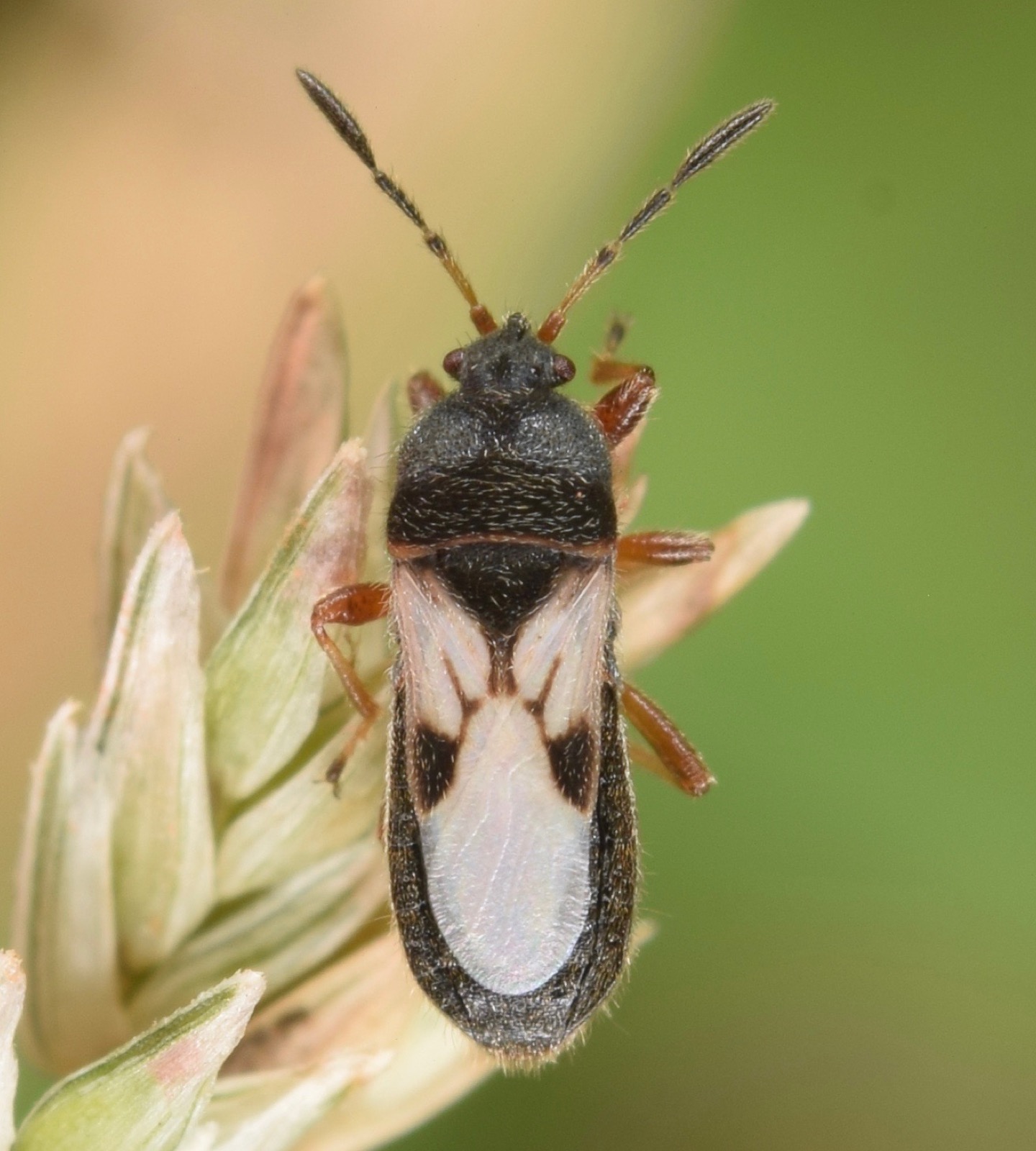
Photo: Christina Butler, CC BY 2.0.
The float test settles it:
- Remove both ends of a coffee can.
- Push the can about an inch into the turf at the edge of a damaged patch.
- Fill it with water, and top it up as the level drops.
- Count what floats to the surface over the next 5 to 10 minutes.
As a rule of thumb, 20 to 25 nymphs per square foot (about 4 to 5 per can) is the point where treatment pays off, though a vigorous, well-watered lawn tolerates more.
Two different chinch bugs, two different calendars
The hairy chinch bug is a cool-season pest. Across southern New England, the mid-Atlantic, and Ohio, it runs two generations a year; in cooler regions further north, it slows to one. Adults become active near 50°F in spring, and the first generation matures in 4 to 6 weeks, roughly by mid-July, with damage worst in hot, dry mid to late summer.
The southern chinch bug is the more serious pest of St. Augustinegrass and runs on a faster clock: 3 to 4 generations a year in northern Florida and Louisiana, 7 or more in southern Florida, where it stays active year-round. In warm summer weather it can go from egg to egg in as little as 5 weeks. Nymph numbers peak several times a season in northern Florida and Louisiana, but the worst damage still lands in the hot, dry stretch. Resistant St. Augustinegrass cultivars such as Floratam, Floralawn, and FX10 hold up better, though a resistance-breaking strain has started damaging Floratam and Floralawn in parts of Florida, so scout a resistant lawn too.
Hairy: nymphs hatch, run the float test
Hairy: worst damage in hot, dry weather
Southern: nymph peak (late June)
Southern: nymph peak (late August)
Southern: nymph peak (early October)
When to treat, and how
Most turf insects, chinch bugs included, are best handled curatively: confirm first, then treat only at or above the threshold. Southern chinch bugs spread mostly by walking, so an infestation shows up as an aggregated patch rather than an even coating; spot-treat the patch plus a border and recheck rather than blanket-spraying the whole yard.
The numbers
- Treat atabout 4 to 5 per coffee can
- 20 to 25nymphs/sq ft
- Spot-treat borderbeyond the damaged area
- 6feet
- Recheckafter spot-treating
- 2 to 3days
- Hairy outbreak densityin sunny areas
- 200 to 300per sq ft
- Southern outbreak densityreports over 2,000 in bad outbreaks
- 500 to 1,000per sq ft
Use a liquid spray rather than granules, which are generally ineffective against sap-suckers. A broad-spectrum liquid is the usual choice when nothing more selective covers a sucking pest, but spot-treating matters for more than convenience.
Skip the water-in, or do it lightly
Chinch bugs live in the thatch and on the foliage, so insecticide residue has to stay up near the surface, the opposite of the deep soak grub control needs to reach the roots. Depending on the product, that means either a light rinse of about an eighth of an inch right after spraying, just enough to settle the residue into the thatch before it dries, or no water at all, with mowing and irrigation held off for a day or two.
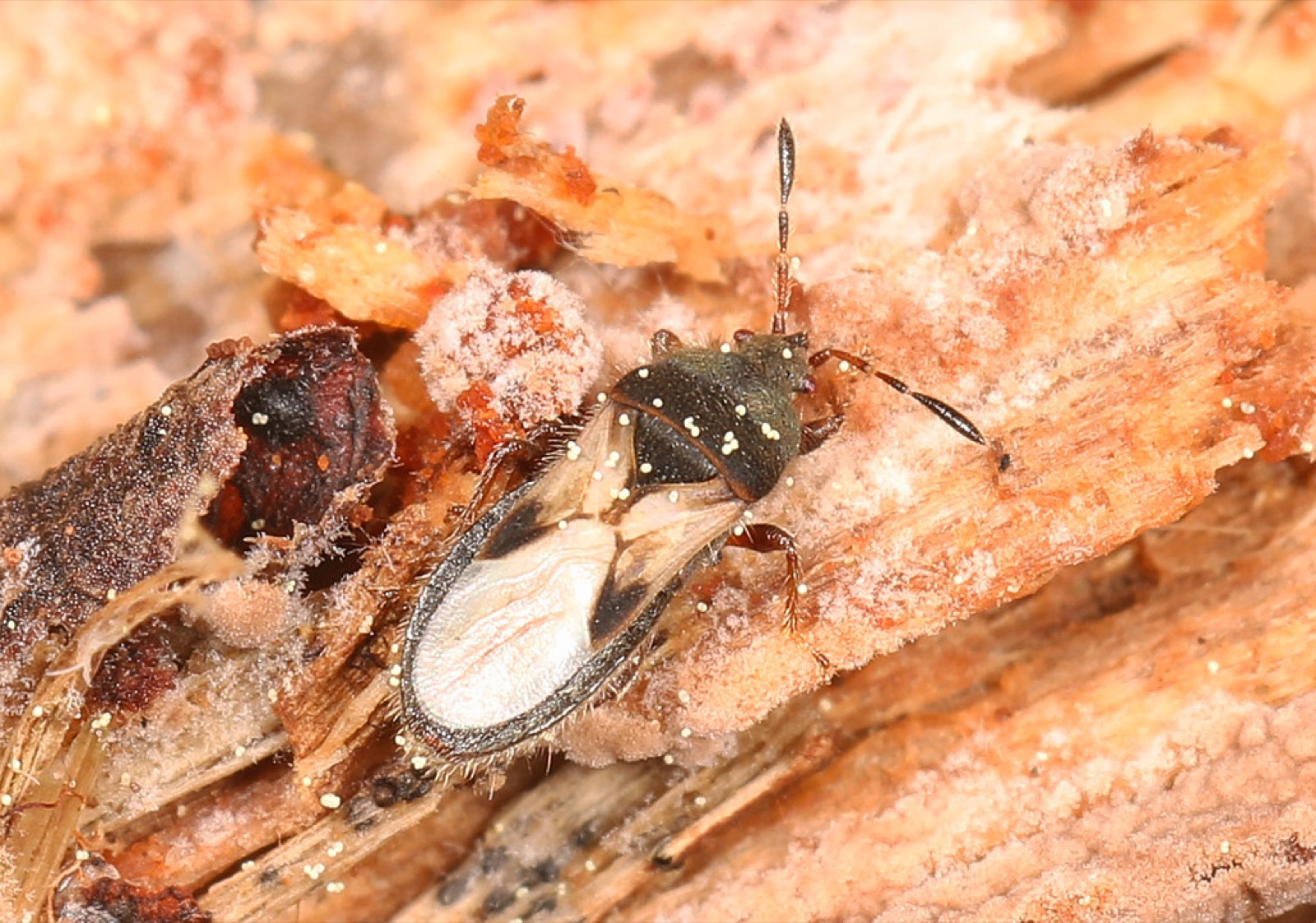
Photo: Judy Gallagher, CC BY 2.0.
Thick thatch complicates both approaches: it shelters chinch bugs and blocks any insecticide from reaching them, so if your thatch layer is noticeably spongy, dethatch before you spray.
If you already run a preventive grub treatment each June, a combination product that pairs imidacloprid with the pyrethroid lambda-cyhalothrin adds roughly 30 days of incidental chinch bug protection over imidacloprid alone. It is still a granular grub-control product, so it needs the deeper water-in grubs require, and the watering-in planner can pick the day for it from your local forecast.
Make the lawn less inviting to chinch bugs
Chinch bugs need hot, dry conditions to thrive, so watering during spring and early summer is a genuine cultural suppression tool: it drowns young nymphs directly and favors a fungus that kills them naturally. The same watering favors other pests, like two-lined spittlebug, so it is not a universal fix, but it is worth doing on a chinch-bug-prone lawn. Heavy nitrogen feeding works the other way, raising chinch bug pressure by producing the succulent growth the insects prefer, so keep fertility balanced rather than heavy.
For cool-season lawns, renovating with an endophyte-enhanced ryegrass, tall fescue, or fine fescue gives real resistance to hairy chinch bugs and several other surface feeders, since the fungus living inside those grasses produces compounds the insects avoid. There is no equivalent for Kentucky bluegrass or warm-season grasses, which is why the resistant St. Augustinegrass cultivars above are the closest southern option.
Common questions
How do I know if I have chinch bugs?
Push a can with both ends removed about an inch into the turf at the edge of a damaged patch, fill it with water, and top it up as the water soaks in. Chinch bugs float to the surface in 5 to 10 minutes if they are there. Look for the damage pattern first too: chinch bugs are sap-suckers, so the grass discolors and thins but stays rooted, unlike grub damage, which lifts up like loose carpet.
What time of year should I treat chinch bugs?
Hot, dry weather in mid to late summer is when chinch bug populations peak and do the most damage, and it is also when curative treatment works best. For the cool-season hairy chinch bug, wait until nymphs have hatched, usually around June, rather than spraying in April or May. For the southern chinch bug on St. Augustinegrass, nymph numbers peak several times across the season, with the worst damage still landing in the hot, dry stretch.
Do I need to water in chinch bug insecticide?
No, and watering in the way you would for grub control can waste the application. Chinch bugs live in the thatch and on the foliage, so the residue needs to stay up near the surface rather than being washed down into the soil. Depending on the product, that means either a light rinse of about an eighth of an inch right after spraying, just enough to settle it into the thatch, or skipping water entirely and holding off on mowing for a day or two.
Will watering my lawn get rid of chinch bugs?
Watering during spring and early summer can help by drowning young nymphs and encouraging a fungus that kills them naturally, so it is a real cultural suppression tool, not just an agronomic one. It will not clear an active midsummer infestation on its own, though, and the same irrigation that suppresses chinch bugs can favor other pests like two-lined spittlebug, so it is not a blanket fix.