
If you have already found grubs and want to knock them back, apply curative grub control in mid to late summer, after the eggs have hatched but while the grubs are still small and feeding near the surface. In most of the country's middle latitudes (the transition zone) that window is late July to mid-August. In the Northeast it runs about two to three weeks later, into mid to late August. Grubs are the C-shaped white larvae of beetles like Japanese beetles and chafers, and they chew grass roots, so the goal is to hit them while they are shallow and vulnerable.
If instead you are trying to prevent grubs before they cause damage, the calendar is earlier. A preventive product goes down in the weeks before egg hatch: imidacloprid in June, near hatch, and the slower-activating diamide chlorantraniliprole (sold as Acelepryn) as early as May, because it needs more lead time to move into the soil. Egg hatch is spread out, running roughly early June through early August, so the exact date shifts with your local weather and the beetle species.
Curative and preventive are two different calendars
The split matters because the two approaches target different moments in the grub's life. A curative treatment is what you reach for after you see grubs or the damage they cause: it uses a fast-acting, short-lived product to kill larvae that are already there. A preventive treatment goes down before the problem is visible and relies on a long-residual product that is waiting in the soil when the eggs hatch.
Most turf insects, grubs among them, are best handled on a curative basis. Outbreaks are sporadic and patchy rather than uniform across a lawn, so blanket-spraying every year is wasteful. The main exception is that a few grub products (notably imidacloprid) work better preventively, and those have to go down before you know whether you have a problem. That is why the advice is to reserve preventive applications for lawns with a real grub history or a known risk factor, and to scout everything else.
The curative window, region by region
Curative control works only during a fairly narrow window: after most eggs have hatched, so the larvae are present, but before the grubs grow large and before they burrow away from the surface. Here is how the timing shifts by region for the common annual-cycle grubs (Japanese beetle, masked and European chafers, Asiatic garden beetle, and oriental beetle):
Curative window, transition zone
Curative window, Northeast
Preventive: chlorantraniliprole
Preventive: imidacloprid
For European chafer in western New York, Connecticut, and Rhode Island, the window is about August 15 to September 1.
Damage tends to show up in late summer and early fall, worsened by heat and drought, which is often the first thing a homeowner notices. By then the grubs are larger, but if they are still feeding in the root zone a curative product can still work. What does not work is waiting until the first hard frost, when grubs burrow deep to overwinter, or treating in the heat of a dry spell, when they drop below reach. Insecticides rarely penetrate deeper than about an inch of soil, so timing is really about catching the grubs while they are shallow.
Confirm you actually have grubs first
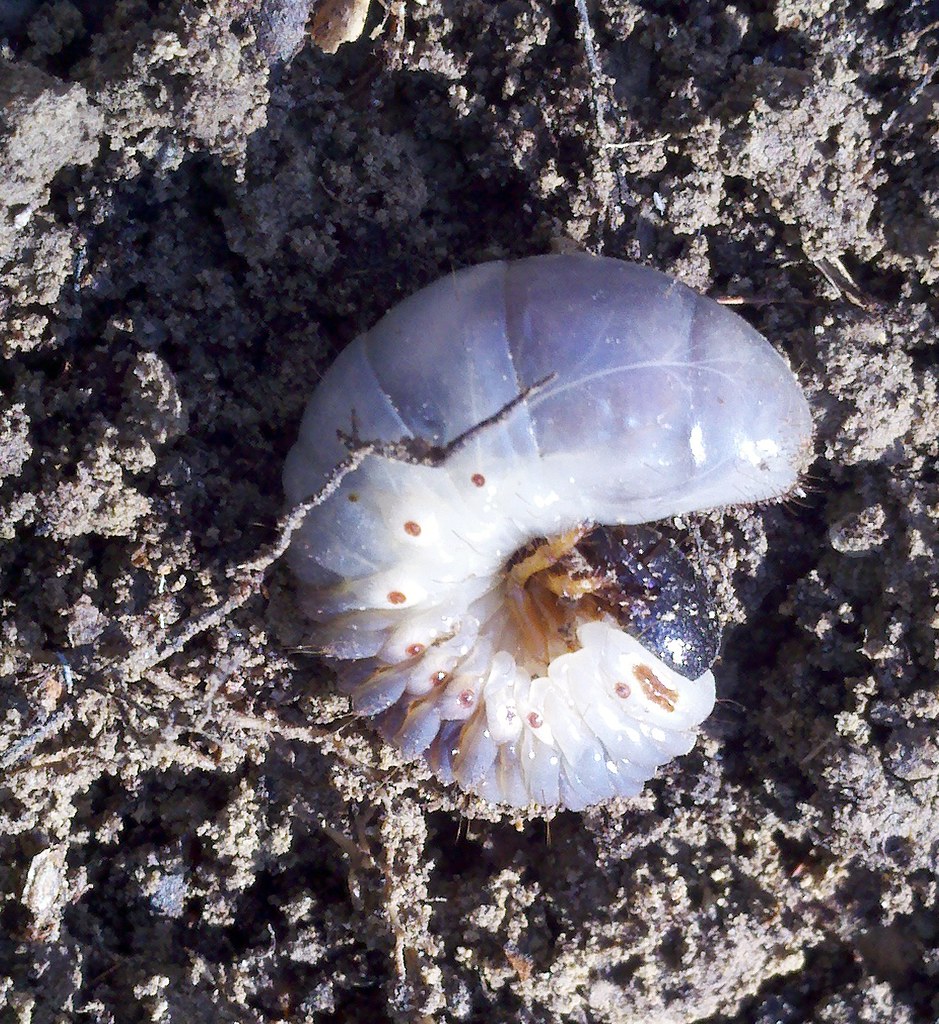 Photo: bobistraveling, CC BY 2.0, via Flickr.
Do not treat on suspicion. Grub thresholds are site-specific, and a weak, stressed, or starved stand shows damage at lower numbers, but a healthy lawn tolerates a surprising grub load.
- Dig up a patch of turf and count the grubs per square foot; the decision comes from what you dig up, not from anxiety.
- Treat only if the count clears the threshold: many lawns can tolerate 6 to 10 grubs per square foot before treatment is worth it, and vigorous, well-watered turf often shrugs off 15 or more.
- Set your expectations before you spend money: a successful grub treatment kills roughly 75 to 90 percent of the larvae, not every last one, so judge the result against that, not against zero survivors.
- If the starting population was high, recheck within about three weeks; if it is not substantially reduced, switch to a different product rather than exceeding the labeled rate.
Water it in, or skip the whole thing
Watering in is the single most important step, and the most common reason grub treatments fail. The insecticide has to reach the soil where the grubs feed, so after you apply it you have to move it down through the thatch (the spongy layer of dead stems above the soil) and into the root zone. The blunt version from turf research: with no watering-in or rainfall, there is no grub control, regardless of whether you used a liquid or a granular product.
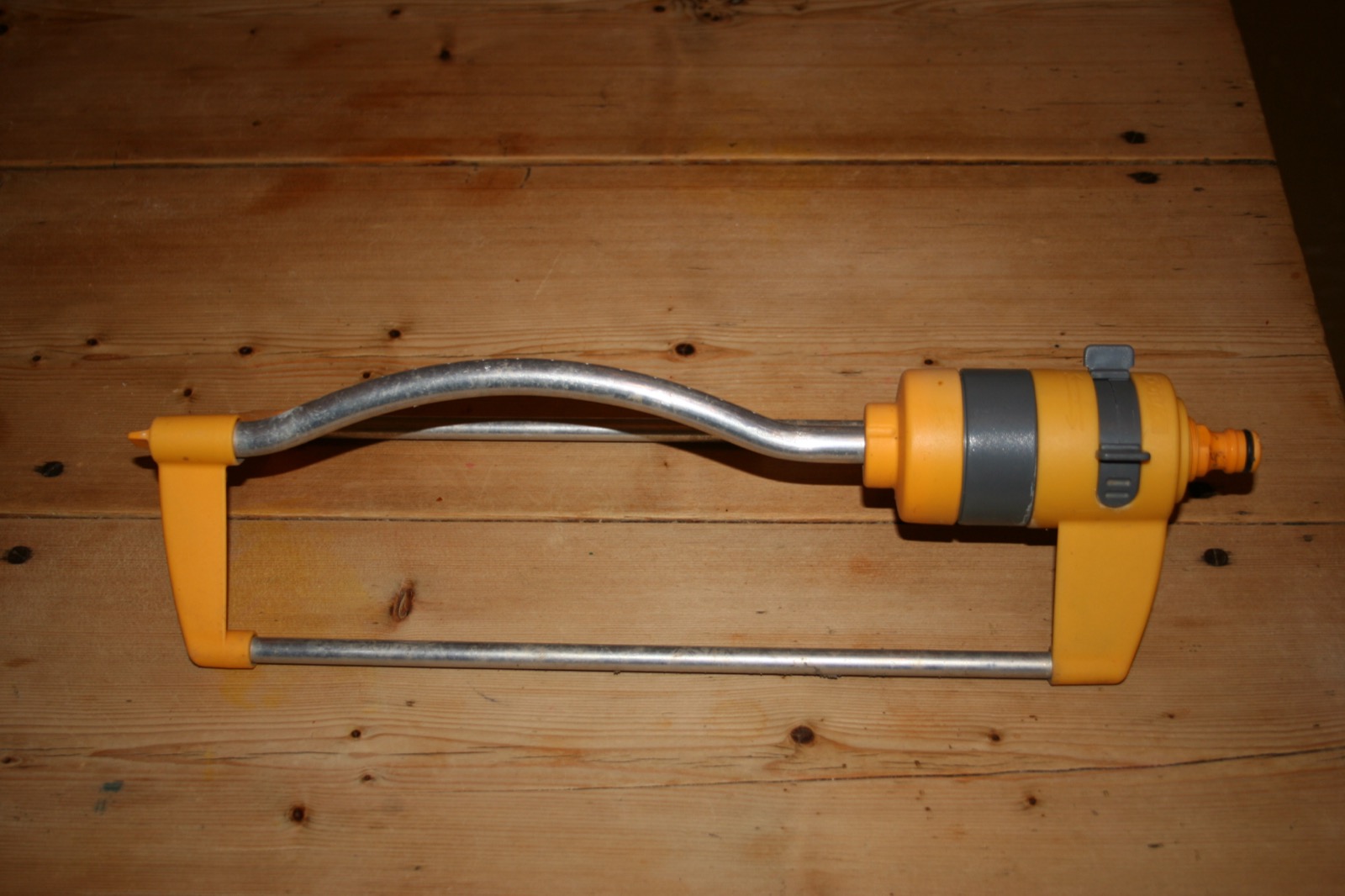 Photo: Andy Fogg, CC BY 2.0, via Wikimedia Commons.
How much water depends on the product and your soil:
- General target: a half to one inch of irrigation immediately after application, enough to wet the soil to about an inch deep.
- Mobile neonicotinoids (imidacloprid) on sandy or high-water-table soil: a lighter quarter inch is preferred, because a heavy soak can leach this mobile chemistry down toward groundwater. Apply the least amount of water that still reaches the root zone.
A couple of conditions will waste the application no matter how carefully you time it. If your thatch is thicker than about half an inch, the insecticide binds up in that organic matter and never reaches the grubs, so dethatch first. And do not apply when heavy rain is due within 24 hours, or onto frozen, waterlogged, or saturated soil, or over a shallow water table, all of which either wash the product off-target or drive it toward groundwater.
The numbers
- Treatment threshold
- 6 to 10grubs/sq ft
- Vigorous turf tolerates
- 15+grubs/sq ft
- Water-in after treating
- 0.5 to 1inch
- Expected killrecheck in about 3 weeks
- 75 to 90percent
That leaves you needing a day with a light, gentle soaking soon after you spread, and no downpour on top of it. That is a forecast question, and the watering-in planner answers it for your ZIP code: it reads your local hourly forecast and picks the day when the rain will water your application in for you, with the reasoning spelled out.
Common questions
When is it too late to apply grub control?
Grubs feed near the surface through late summer and early fall, then burrow deep for winter after the first hard frost. They also drop below reach in peak summer heat and drought. Insecticides rarely penetrate deeper than about an inch of soil, so once the grubs have left the root zone a treatment is wasted. The practical window is while they are small and feeding, roughly late July through September depending on your region.
Should I use a preventive or a curative grub product?
Most turf insects, grubs included, can be handled curatively: scout in early to mid August and treat only if you find them, because outbreaks are patchy rather than lawn-wide. Reserve preventive products for lawns with a grub history or a known risk, such as turf kept lush and irrigated during beetle flight. A preventive application is not needed most years.
How much water do I use to water in grub control?
Enough to move the insecticide down through the thatch into the root zone where grubs feed. The general target is a half to one inch of irrigation right after application. For a mobile neonicotinoid like imidacloprid on sandy or high-water-table soil, a lighter quarter inch is preferred to limit leaching toward groundwater. Apply the least amount that reaches the root zone, and never water in on frozen, waterlogged, or saturated soil, or when heavy rain is due within 24 hours.
Is spring a good time to apply grub control?
Usually not. Grubs that survived winter are large and hard to kill in spring, the feeding window is brief, the turf tends to outgrow the light spring damage, and a spring treatment gives no protection against the next generation that hatches in summer. Spring is better spent scouting. Save the treatment for the summer window.